
In 1987, my monograph The Voice of the Sarangi was published by the National Centre for the Performing Arts in their Quarterly Journal.
With this publication I hoped to draw attention to this marvelous but marginalized bowed instrument which played a key role in Hindustani music between the mid-eighteenth and early twentieth centuries. In this period professional female singers were the most sought-after performers, and sarangi players were their main teachers and accompanists.
Approximately 7,000 copies of The Voice of the Sarangi were printed and they were sold out within a year.
Praise for The Voice of the Sarangi
‘The Voice of the Sarangi is one of the most important books written not just about this wonderful instrument and its players but also about Hindustani music history and culture as a whole. More people should read this work. I’m going to make it mandatory reading for my students, now that it is so easily accessible online.’
Jim Kippen
Archive.Sarangi.Pk, 2006.
‘This attractive book on the bowed fiddle of India is a labor of love, life and research. Joep Bor puts the sarangi on the map of Indian and world music in a comprehensive study that stands out in the richness and diversity of its source materials. Driven by a musician’s love for his instrument, a seeker’s devotion to his teachers, and a relentless curiosity, this Dutch botanist-turned-musician has pulled together years of musical and intellectual discovery into a coherent, readable, and superbly illustrated gold mine of historical and ethnographic information.’
Regula Burckhardt-Qureshi
Ethnomusicology, 1994.
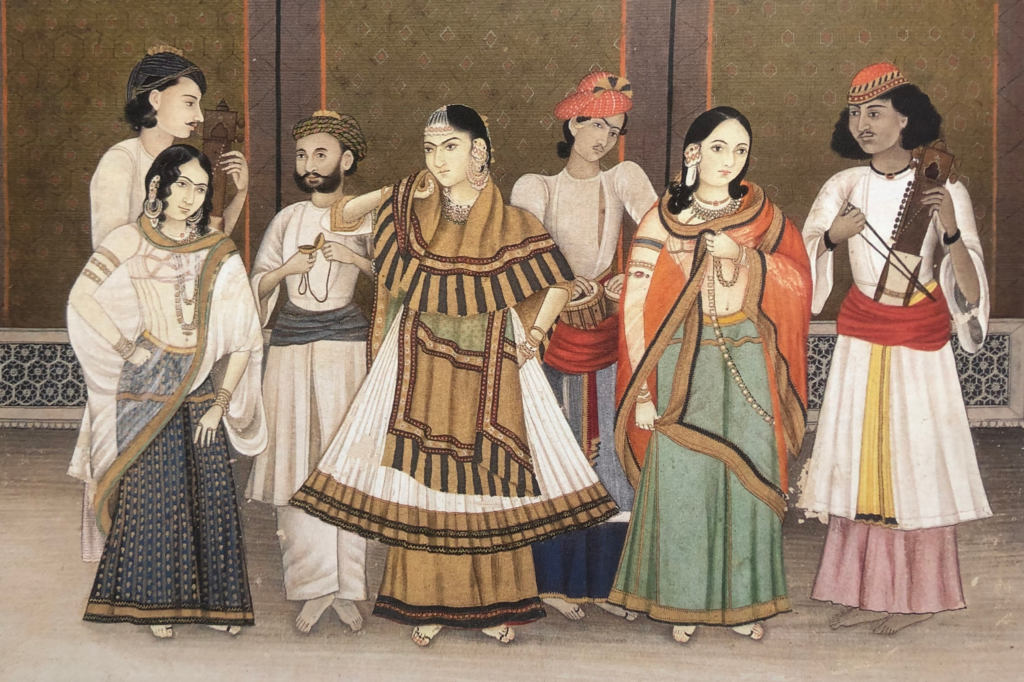
(Click to enlarge photo)
‘With 85 notes and 122 illustration, Bor’s presentation interests as well as impresses. No such comparative attempt to carve an independent niche for sarangi is available elsewhere. […] Of no less importance is Bor’s successful placing of the instrument in a wider cultural setting. […] In the highly pertinent sub-sections on courtesans and nautch Bor has rightly brought out that the courtesans who relied a great deal on the sarangi players were not all sellers of the flesh.’
Ashok Ranade
Yearbook for Traditional Music 21, 1989.
‘In contrast to earlier thought, Bor argues that the sarangi is indigenous to the subcontinent. […] Of equal value is Bor’s discussion of the sarangi from the 17th century to the current decade. A detailed picture is constructed using several different sources; namely literary references, numerous valuable iconographic illustrations lavishly reproduced in this source, an analysis of morphological evolution within the calssical sarangi itself, and oral histories of several famous sarangi musicians of the recent past. […] Joep Bor’s spirited study […] provides a valuable, amended, and carefully constructed perspective worthy of the subject.’
Reis Flora
The World of Music 29, 1989.