
When I first heard Ram Narayan’s LP Ragas du matin et du soir (at the home of the artist William Lindhout) in 1965, and a little later two old 78 rpm discs of Bundu Khan (at the house of another friend, the painter Eugène Brands), I had an experience that is hard to describe. I’ll never forget those moments of ecstasy and joy.
It seemed as if the world around me had dissolved. These sarangi players were telling a story and conveying a universe of images and feelings that were both familiar and unknown to me. Perhaps I was entering the transcendent state of awareness known as rasa, in which one is lost in ‘aesthetic rapture’ and experiences the essence of emotion. However this may be, the sweeping ever-changing melodies caused me to enter in some sort of trance. I was deeply moved and felt the urge to know more about this remarkable music and the artists who played it. This is how I fell in love with the sarangi and Indian music.
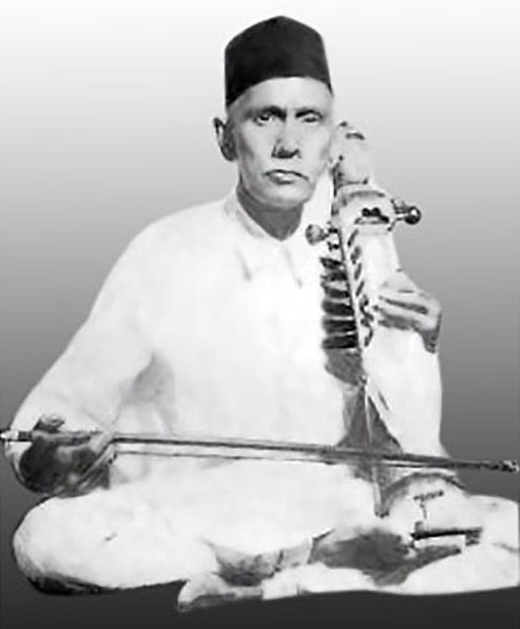
But where could I buy such an instrument? After various enquiries I found a sarangi in a Chinese (!) shop called Eberhardt Aziatische Kunst in the centre of Amsterdam. But there my luck ended. It was a new, mediocre instrument, and in the mid-1960s not a single person in the Netherlands could tell me how to tune and play it. Various encounters with visiting Indian musicians – including sitar maestro Vilayat Khan in 1966 – also did not yield the basic information I needed. Nevertheless, I began to fool around with the sarangi and even had some gigs, like the opening act of Jimi Hendrix’s performance with our ‘experimental improvisation group’ Sangita on Dutch TV (Hoepla, VPRO) in November 1967.

When I came to know that Ram Narayan was performing in London in the winter of 1968, I went there with the determination to ask him to teach me. Meeting him was both an overwhelming and a rewarding experience. He showed me the basic fingering and bowing techniques, and how to tune the sarangi. He also taught me a few scales and exercises and invited me to study with him in Bombay.
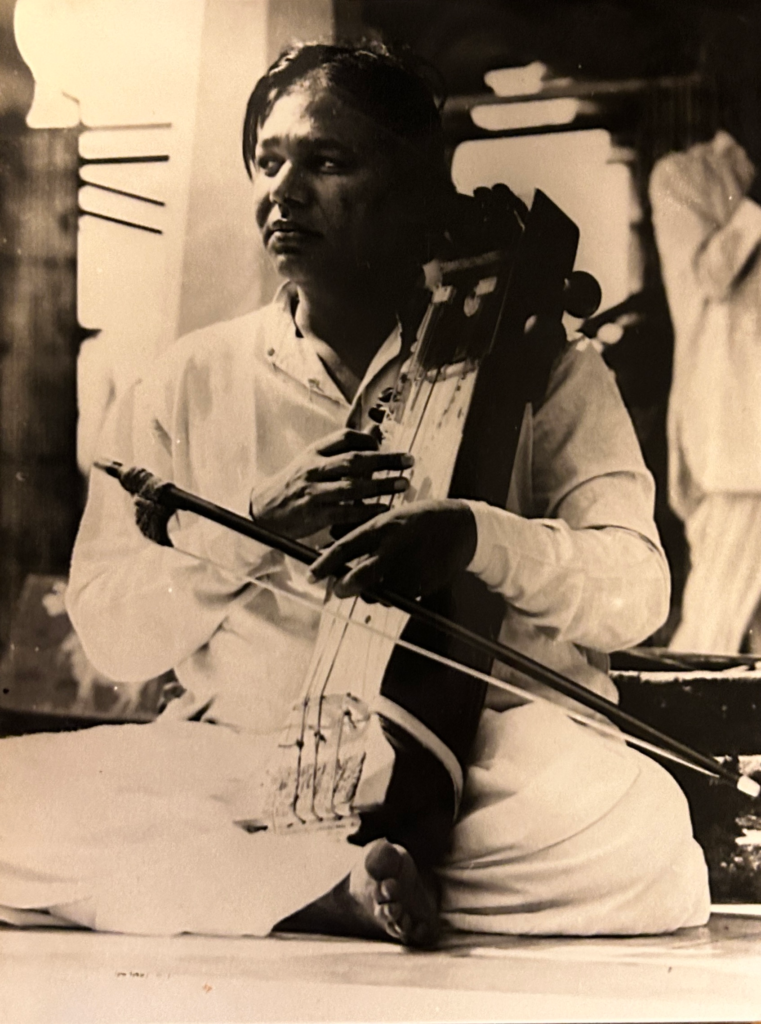
However, these first lessons were also a frustrating and humiliating experience. Ram Narayan made it very clear to me that almost everything I had tried to figure out on my own was wrong! As far as the sarangi and Indian music were concerned I was a novice, reduced to a state of infancy. Even though I was a student assistant in botany at the University of Amsterdam and belonged to a well-known family of violinists, all that I had learned so far was to no avail. It slowly dawned on me that I had to start from scratch. But I had made up my mind. There was no way back. The Indian bug had bit me.
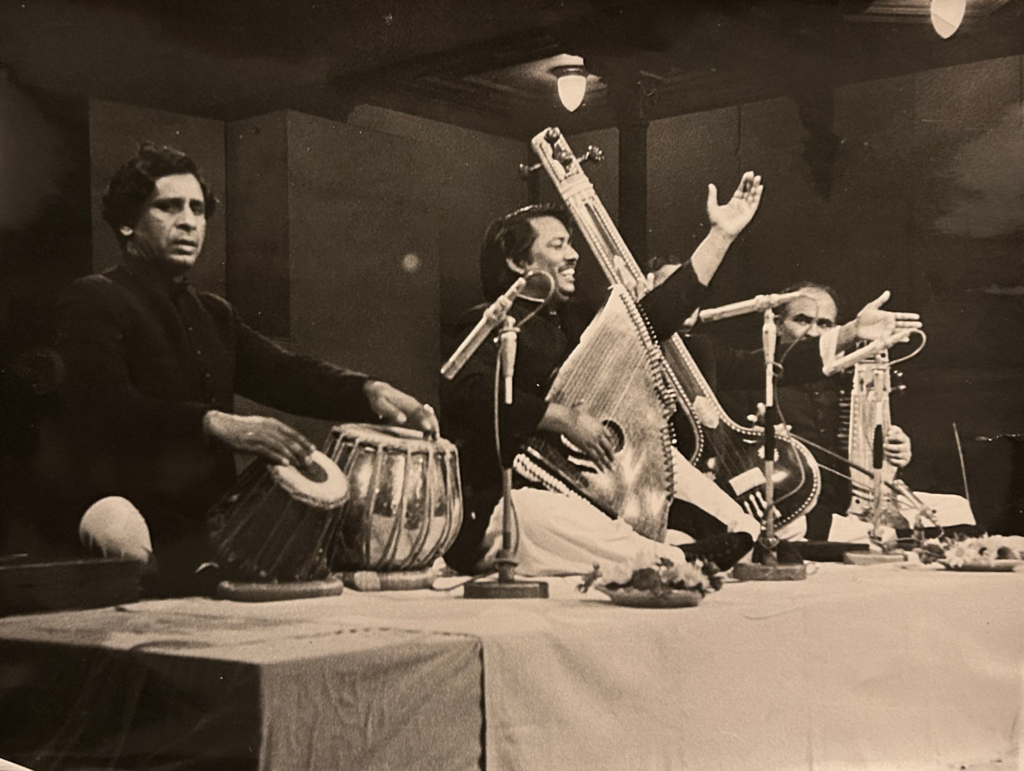
In the summer of 1970 I accompanied the Pakistani singers Nazakat and Salamat Ali Khan (with sarangi player Ghulam Muhammed and tabla player Shaukat Hussain) on their concert tour in the Netherlands and wrote the liner notes for an LP that was published on this occasion.
Soon after that I found myself launched on a musical journey that took me first to Bombay in 1971-1972, and later to New Delhi, Varanasi and Calcutta, and many stops in between.